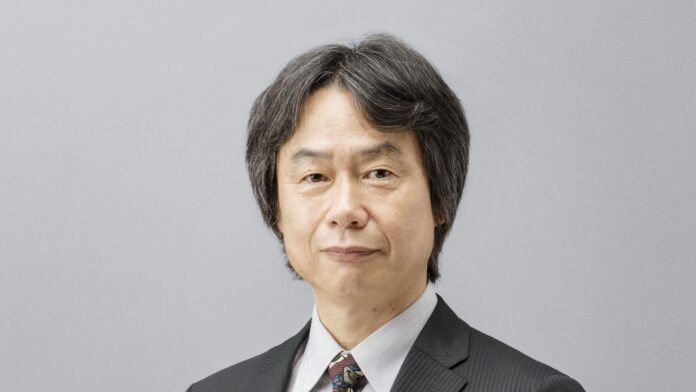

Shigeru Miyamoto, the man behind Mario, Zelda and Pikmin, is getting Japan’s Order of Culture, the first person from video games ever chosen. And at his press conference in Kyoto, the 73-year-old Nintendo fellow gave one of the clearest answers we’ve heard from a big-name creator on generative AI: the more AI handles the work, the more people will have to think hard about what “making” something actually means.
The Japanese government announced this year’s Order of Culture (文化勲章) recipients on Friday, Oct. 23. The Yomiuri Shimbun notes it’s the first time the honor has gone to the games field of media arts. Miyamoto, now Nintendo’s Representative Director and Fellow, spoke to reporters on Oct. 22 at Nintendo’s headquarters in Kyoto, and outlets including Famitsu, 4Gamer and GAME Watch published long transcripts.
“Making” versus “doing the work”
A reporter asked how he sees generative AI, now that it’s lowering the barrier to making things. Miyamoto went back to his own start in design. When he was young, designers learned lettering by hand, and being able to draw clean poster type was enough to be called a designer. Then word processors and computers took over that technique, and something else showed up. Once tools handle the technical parts, he said, a person’s sense of layout and their own design ability finally come to the surface. “That’s exactly what’s happening with AI right now,” he said, according to Famitsu.
Then he drew the line he says he always uses. There’s making something, which is deciding the overall structure and where you’re headed. And there’s the work that follows: filling holes, polishing. “The tricky thing is, the work is fun,” he said. It gives you a strong sense of making something. “What’s scary is getting satisfied with the work and mistaking that for having made something good.”
His conclusion was upbeat. “The more AI does all kinds of work for us, the more it becomes a chance for everyone to think seriously about what it really means to make something,” he said in Famitsu’s transcript. Things made only by copying don’t last, he added. What lasts is a person with an intention, using a computer to help with the work. “AI may keep evolving and might end up doing everything, but I think there’s still plenty left for us to do.”
The translations are ours, from the Japanese transcripts. GAME Watch‘s version puts the copying point more bluntly: designs made by copy-and-paste alone don’t last, because there’s no personal intent behind them.
Japan’s reaction
The quotes spread quickly on Japanese social media. Iza (Sankei) collected replies calling his comments “golden words” (金言) and saying they gave people “chills” (痺れる). It struck a nerve because the argument over AI in games is loud right now, and Miyamoto didn’t pick a side so much as move the question. He didn’t say AI is good or bad. He said it strips away the part of creative work that was easy to confuse with talent.
He had advice for young developers too, per 4Gamer: stop building games by taking an existing fun game and modding it to be “even more fun.” Building from a raw “what if we tried this?” idea is more fun, and more rewarding, he said.
Fifty years of Nintendo
Miyamoto joined Nintendo in 1977 after studying industrial design at Kanazawa College of Art, and went on to create or shape Donkey Kong, Super Mario Bros., The Legend of Zelda and Pikmin. He was named a Person of Cultural Merit in 2019, according to GAME Watch. Accepting this one, he said it wasn’t his alone: “I didn’t make these by myself. I made them with a lot of people, so I’ll accept it on their behalf.”
He also told reporters he considers 3D CAD software “the best toy” and that game makers take interface design more seriously than almost anyone in computing, a fair point for anyone who has ever fought a car’s touchscreen. For the AI models doing more of that “work” every week, see our story on Moonshot’s new Kimi K3.1 Pro, and for Japan’s robot makers, our report from CEATEC 2026.
Sources: Famitsu, The Yomiuri Shimbun, 4Gamer, GAME Watch, Iza (Sankei Digital).
— The EVX News team
Featured image: Shigeru Miyamoto in an official portrait taken when he received the Japanese government’s honors, June 2015. Image: Minister’s Secretariat Personnel Division (大臣官房人事課) / Wikimedia Commons (CC BY 4.0), cropped.

