
Tesla wants to make the raw material for its solar panels, too. A tax-incentive application posted by the Texas Comptroller on Wednesday describes a proposed $3.1 billion “Polysilicon Refinery Project” in Nueces County, near Corpus Christi, that would turn out ultra-high-purity polysilicon for silicon ingots and N-type, high-efficiency solar cells. The application calls it “the upstream component of Tesla’s vertically integrated domestic solar manufacturing platform.”
The filing (application J0054, Tuloso-Midway ISD) went up on the Comptroller’s JETI applications page at 11:36 a.m. ET / 8:36 a.m. PT Wednesday, Nov. 18 (1:36 a.m. JST Thursday, Nov. 19). Sawyer Merritt flagged it on X a little over an hour later.
What’s in the paperwork
The numbers come from an EY economic analysis attached to the application, built on data Tesla supplied. Spending runs from 2027 through 2030, with the bulk landing in 2028 ($1.02 billion) and 2029 ($1.57 billion). Of the $3.108 billion total, about $1.5 billion goes to engineering and construction, $1.425 billion to equipment and $183 million to utility infrastructure. Tesla would hire 260 people in 2030 and reach 515 by 2032, at average total compensation of $130,000. EY adds another 1,340 jobs at suppliers and local businesses, which are not Tesla positions.
The equipment list reads like a chemistry set at industrial scale: hydrochlorination and trichlorosilane (TCS) synthesis, chlorosilane distillation trains, hydrogen recovery, silicon tetrachloride recycle loops, and Siemens CVD reactors. That’s the Siemens process, the long-standing method for growing hyper-pure silicon rods, rather than a new chemistry. The site is a cluster of parcels along State Highway 44 near Robstown. Tesla already runs a lithium refinery elsewhere in the same county, which opened in January.
This is an application, not a done deal. Tesla says it is still comparing the Texas site with locations elsewhere, and states that without a JETI agreement (a 10-year cap on taxable value for school taxes) it “would not make the proposed investment in this state.” TeslaNorth, which reported the filing Wednesday, notes the listing shows no executed agreement yet.
Where it fits
The refinery would sit one step ahead of Project Crystal Sun, the $10.1 billion Fort Bend County factory planned to turn ingots and wafers into cells and finished panels. Polysilicon is what goes into those ingots. On Tesla’s Q4 2025 call, Elon Musk said the company would work toward 100 GW a year of solar cell production integrated from raw materials to finished panels. Until Wednesday, the raw-materials end of that sentence had no address.
The filing doesn’t hide why. It says more than 90% of the world’s solar-grade polysilicon is made in China, and the International Energy Agency’s PV program puts China’s 2025 share at 92%. A refinery that only starts in 2030 won’t move that number much on its own, and the filing gives no tonnage. But it fits a pattern. Tesla refines its own lithium, designs its own cells, and as of this week is building its own transformers. Silicon was the obvious gap.
The EVX Take
Japan is a useful mirror here, because it already lost this business once. Tokuyama, the Yamaguchi chemicals maker, spent heavily on a Malaysian solar-grade polysilicon plant and then handed it to Korea’s OCI in 2016 after engineering problems and a price collapse, keeping only semiconductor-grade output at home. Today the IEA’s PV program says polysilicon production in Japan and Korea is limited to semiconductor uses, so the panels on Japanese roofs run on imported silicon. The Japanese name with the most direct stake in Tesla’s move is Shin-Etsu Handotai, which owns 19.5% of Hemlock Semiconductor, the only polysilicon maker headquartered in the US and a potential rival or supplier. Our read: if Tesla can make Siemens-process silicon pay at Texas power prices, where Tokuyama couldn’t in Malaysia, it strengthens the case Tokyo is making with its perovskite push that solar supply chains can be rebuilt outside China. It’s also a reminder that the hard part isn’t the reactor. It’s the electricity bill.
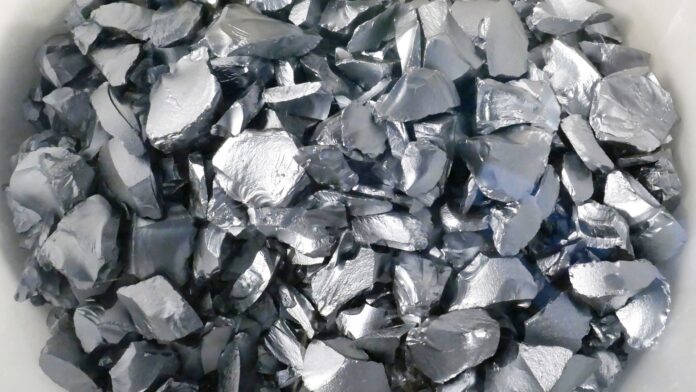
Sources: Tesla’s JETI application J0054 and EY economic analysis (Texas Comptroller), TeslaNorth, Sawyer Merritt on X, IEA PVPS Trends in Photovoltaic Applications 2026, Tokuyama (Sept. 28, 2016), Hemlock Semiconductor / Corning, Inside Climate News via TPR. Featured image: polycrystalline silicon at the Deutsches Museum, Munich, photo by Tiia Monto / Wikimedia Commons (CC BY 4.0), cropped.

