
Starlink has listed a new plan for cargo ships on its maritime page: Global Business Merchant, priced at $4,650 per vessel per month, with service due in 2027. According to PCMag, the page describes it as built for “merchant vessels that need unlimited priority connectivity in port, coastal areas, and on international waters.” Fleet operators can apply now through Dec. 31, 2026, and early applicants may get extra discounts that Starlink hasn’t put a number on.
What you get for $4,650
Each approved ship gets one service line tied to its International Maritime Organization (IMO) number, which is the permanent ID every large commercial ship carries. A line includes unlimited “priority” data (your traffic is served first when the network is busy), global ocean coverage, remote fleet management and up to two Starlink kits per ship (a kit is the antenna plus router). According to TeslaNorth, data can’t be pooled between ships, and a kit can’t be moved to another vessel without Starlink’s approval. Starlink also notes that listed speeds are maximums, not guarantees, and can drop when the network is congested.
The price stands out next to what Starlink already sells. Splash247 notes it’s more than double the $2,150-a-month Global Priority 2 TB plan, and well above the $2,500-a-month unlimited maritime package marketed last year. Some coverage calls the new plan “gigabit” class, but Splash247 says Starlink hasn’t said which terminals are bundled or guaranteed gigabit speeds. The plan arrives as SpaceX brings its next-generation V3 satellites into service, and it targets ships that want to stop counting gigabytes.
Merchant shipping isn’t new territory. TeslaNorth points to Maersk, which signed up to equip more than 330 container ships, and to North Star, an offshore operator using Starlink across a 36-vessel fleet. Starlink’s own page features Greece’s Angelicoussis Group, which fitted its tankers, according to The Circuitry.
Japan has been here before
Japan’s two biggest shipping lines started testing Starlink years ago. NYK began trials in December 2022, and by December 2023 Nikkan Kogyo Shimbun reported it would grow from about 30 ships to more than 100 ocean-going vessels by the end of fiscal 2024. In October 2023, Mitsui O.S.K. Lines (MOL) announced a full rollout to 233 ocean-going ships managed by its group, about 140 of them in fiscal 2023. MOL said its trials showed speeds up to 50 times faster than before, which made video calls home and streaming possible. The company framed it as a crew-welfare move against a seafarer shortage, citing a Drewry estimate that the world was about 10% short of the sailors it needs in January 2023.
The EVX Take
The new plan is about price tiers, not new technology. Starlink is sorting shipping customers by how much data they want, and the top tier is for ships that treat connectivity as a utility, like fuel. At list price, equipping MOL’s 233 ships would come to roughly $1.08 million a month (about ¥172 million). That’s simple multiplication for illustration only; fleet deals are negotiated, and we don’t know what Japanese lines pay.
For Japan, the interesting question is who needs more than crew Wi-Fi. Japanese lines moved to Starlink mainly for crew welfare, and the Merchant plan’s pitch (unlimited priority data, remote management) fits the next step, which MOL has itself described: real-time information sharing between ships and shore, remote support when something breaks. That would pull Starlink deeper into the day-to-day operations of Japan’s shipping industry. It’s also a reminder that Starlink is now a business in its own right, one the committees in the Tesla-SpaceX merger talks (which we covered Tuesday night) will have to put a value on.
Sources: PCMag, Splash247, TeslaNorth, The Circuitry, NT, MOL press release, Nikkan Kogyo Shimbun, and Starlink’s own maritime plans page at starlink.com. For another Starlink hardware story, see the Starlink Mini 2 launch.
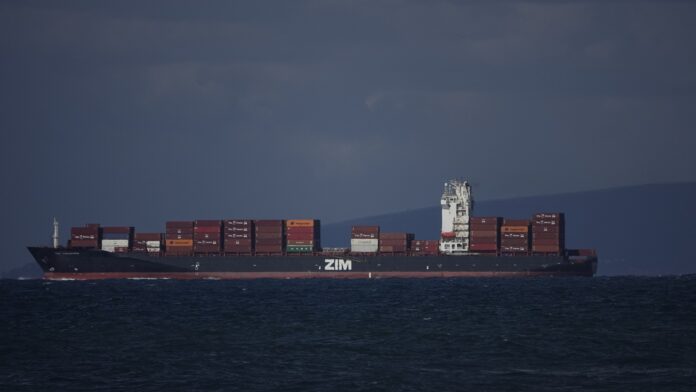
Photo: A container ship at sea. Photo by DmitTrix, CC BY 4.0, via Wikimedia Commons (cropped).Follow @teslaloha on X for more

