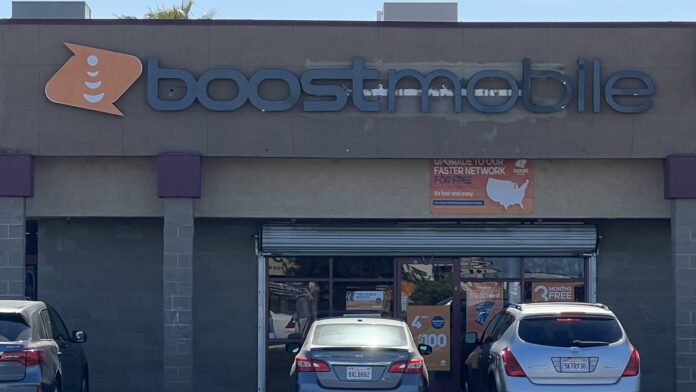

SpaceX has been talking with EchoStar about either buying Boost Mobile or getting access to its network, The Washington Post reported on Monday, Nov. 2. The goal would be a SpaceX-branded phone service in a US wireless market the Post puts at about $235 billion a year.
The story went up at 5:00 AM ET / 2:00 AM PT Monday (7:00 PM JST Monday). Elon Musk discussed it personally and met EchoStar chairman Charlie Ergen last month, according to two people familiar with the negotiations, the Post said. Neither SpaceX nor EchoStar has confirmed anything, and Reuters said neither company answered its request for comment. No price, structure or timeline has been reported.
Investors took it seriously anyway. EchoStar rose more than 3% on Monday, Fierce Network reported, and SpaceX shares were up about 4% by late morning in New York, according to a TIKR analysis on Yahoo Finance.
Why Boost, and why now
The Post’s sources say Musk first asked the heads of Verizon and the other big carriers for access to their networks so SpaceX could sell its own phone plans. All three said no. Boost is the other door. It has customers and a retail brand but no towers of its own anymore: it rides on capacity leased from AT&T and T-Mobile. EchoStar had 7.38 million wireless subscribers at the end of the second quarter, mostly on Boost and Gen Mobile, per Reuters.
That lease is also the catch. The Post said the deal “may need consent” from AT&T and T-Mobile, because carrier wholesale agreements usually can’t pass to a new owner without the host’s approval. New Street Research analyst David Barden called that “a gross understatement” in a note quoted by Fierce. LightShed Partners went further and said SpaceX can’t “simply acquire Boost Mobile and inherit its MVNO agreements.”
The carriers have been blunt in public. “I see no room for an MVNO with SpaceX,” T-Mobile CEO Srini Gopalan said on the company’s Oct. 28 earnings call, Light Reading reported. Verizon CEO Dan Schulman said there are “no back doors” to Verizon’s wholesale deals and put the cost of building a real fourth carrier at $300 billion to $500 billion over seven or eight years. Musk answered on X that it would take “2 or 3 years.”
The pieces SpaceX already has
Boost wouldn’t be the first EchoStar asset SpaceX has picked up. In September 2025 EchoStar agreed to sell SpaceX its AWS-4 and H-block licenses for about $17 billion in cash and SpaceX stock, plus a long-term deal that lets Boost customers use next-generation Starlink Direct to Cell. The FCC approved the transfer in May.
Since then SpaceX has been collecting the rest of a carrier, piece by piece. In October it agreed to buy Grain Management’s nationwide 800 MHz licenses, reportedly for about $8 billion in cash, the low-band airwaves that get through walls (Musk called it “the last critical piece of the spectrum puzzle”). Bloomberg reported on Oct. 22 that SpaceX wants access to at least 80,000 US cell sites. The FCC also voted last week to open more spectrum to satellite-to-phone service, which we covered in our FCC piece. And on its October earnings call, SpaceX said it wants to become a major US mobile carrier.
What SpaceX doesn’t have is millions of paying phone customers on day one. Its own service on the new satellites isn’t due until early 2028. Boost, with its 7 million-plus lines, would fill that gap, if the landlords allow it. TeslaNorth notes that the two companies are already tied together through the spectrum deal, so a Boost agreement would build on an existing relationship rather than start from scratch.
The EVX Take
Japan shows how differently this goes when carriers say yes: KDDI launched au Starlink Direct in April 2025, and docomo Starlink Direct passed 10 million users in under six months, free on every Docomo plan. In the US the same satellites look like a threat, so SpaceX is trying to buy its way around the carriers instead of working through them. For readers in Japan, satellite texting on your phone will keep arriving through Docomo and au, not a SpaceX-branded carrier, since Japan’s licensing rules and the carriers’ head start make a Boost-style shortcut very unlikely here. The bigger effect is on price: a SpaceX phone plan in America would put a ceiling on what any carrier can charge for satellite coverage, and Docomo already gives it away.
Barden also said a SpaceX video interview explaining its mobile plans could come in the next month or two. That would be the first time the company lays out the whole strategy in public, Boost or no Boost.
Sources: The Washington Post, Reuters, Fierce Network, Yahoo Finance (TIKR), Light Reading, TeslaNorth, EchoStar investor relations, FCC.
— The EVX News team
Featured image: A Boost Mobile store in Stockton, California, March 2022. Photo: TaurusEmerald via Wikimedia Commons, CC BY-SA 4.0 (cropped).


