
Japan registered 12,733 battery-electric cars in October, Tesla’s Shanghai plant shipped 67,829, and China’s factories posted a record 1.81 million new energy vehicles while shoppers at home bought fewer. Tokyo is also getting ready to certify taxis with no steering wheel. Here’s the week on EVX News, in eight stories and one number.
If last week got away from you, this is the catch-up. Every item links to our full story, sources and all.
1. Japan’s October BEVs: still about three times last year
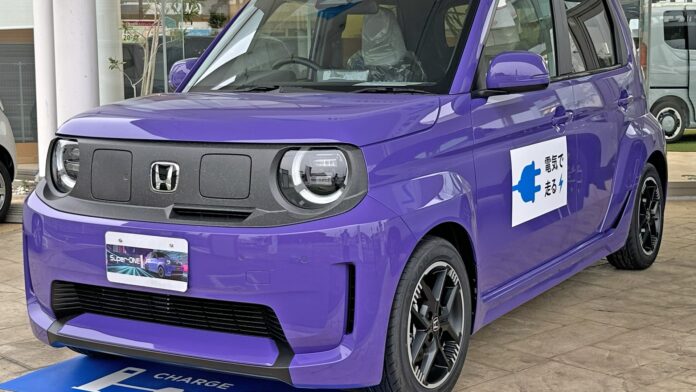
Dealers registered 12,733 battery-electric passenger cars in October, or 5.9% of the 216,757 cars counted by the Japan Automobile Dealers Association. That’s a step down from September’s 13,440, and still roughly 3.3 times October 2025. Toyota led with 4,108, including 3,142 bZ4X models. Honda’s new Super-ONE did 2,208, and the Nissan Leaf added 1,227. The usual Tesla import proxy came in at 2,162, and BYD’s RACCO kei EV set a brand record at 607. The kei model-name split is still pending, so we are not inventing an all-in total. The full October tables, brand by brand.
2. Tesla China ships 67,829, a familiar start-of-quarter dip
Giga Shanghai’s wholesale total rose 10.3% from a year earlier and fell 28.9% from September’s 95,366, according to preliminary figures from the China Passenger Car Association. It was Tesla China’s lowest month since February, and its 12th straight month of year-on-year growth. The year-to-date tally is 810,889, up 21.4%. The first estimate doesn’t split domestic sales from exports. October is almost always the soft month after a quarter-end push, and the down-payment cut to 39,900 yuan (about $5,990) landed too late to do much for this reading. The numbers, and why the monthly drop is less scary than it looks.
3. China’s factories set a record. Its shoppers did not.
NEV wholesale hit an all-time high of 1.807 million in October, up 12%. Retail sales were 1.148 million, down 10% from a year earlier, the tenth straight annual decline. That leaves a gap of about 659,000 vehicles between what left the plants and what customers in China drove home, a mix of exports and cars sitting with dealers. Plug-ins still took a record 67.8% of retail sales, because gasoline cars are falling faster: production of pure fuel light-duty vehicles plunged 52% in the first four weeks of the month. The wholesale-versus-retail split, in full.
4. BYD’s best month of 2026, while the startups split
BYD sold 490,168 new energy vehicles in October, and its battery-electric passenger cars topped 300,000 for the first time, at 305,743. Exports did most of the lifting, at 170,194, more than double a year earlier. At home, BYD sold 319,974 cars, 10.57% fewer than in October 2025. Leapmotor set another record at 106,127. Xpeng and Xiaomi each cleared 50,000, with Xpeng’s overseas deliveries hitting a record 13,326. Nio and Li Auto both went backward, to 34,246 and 29,025. The brand-by-brand scoreboard.
5. Japan prepares to certify taxis with no steering wheel
The transport ministry is preparing to certify driverless cars that have no steering wheel or brake pedal under one standard set of rules, instead of approving each vehicle one at a time, the Nikkei reported. The revised standards would cover Level 4 and Level 5 vehicles and apply from December. The aim is mass production, and a path toward about 10,000 Level 4-capable buses, taxis and other vehicles by fiscal 2030. MLIT itself has not announced the revision, so the timing still comes from the Nikkei. What would change, and why December.
6. Zoox puts Japan on its overseas test list
Amazon-owned Zoox plans to send data-collection vehicles to Europe and Asia, and CEO Aicha Evans named Japan and South Korea alongside London and other EU cities at the WSJ Tech Live event on Nov. 4. There is no public timeline and no named city. The first step would be sensor-equipped Toyota Highlander SUVs that map roads under a safety driver, not the toaster-shaped robotaxi Zoox is known for. Treat it as intent until a mapping SUV shows up on a Japanese street. What Evans said, and what would make it real.
7. Toyota recalls 121,260 of its China-built EVs
GAC Toyota is recalling 100,175 bZ3X crossovers over front suspension nuts that can work loose, plus 18,130 bZ7 sedans whose Comfort Stop feature can lengthen stopping distances and 2,955 more bZ7s whose camera software can make the steering wheel turn unexpectedly. The two sedan fixes are free software updates. On the same day, Toyota also recalled 55,477 Land Cruiser Prado and Lexus GX 550h hybrids over a fuel-line connector, bringing the China total to 176,737 vehicles. Japanese buyers cannot get the bZ3X or bZ7. The three EV campaigns, from the regulator’s filings.
8. Chinese batteries now take more than half the market outside China
From January through September, six Chinese battery makers held 56.4% of EV, plug-in hybrid and hybrid battery usage outside China, up from 43.1% a year earlier, according to SNE Research. CATL and BYD alone took 44.5%. Panasonic, the only Japanese name in the top ten, slipped to 8.4% from 10.5%, with 35.6 GWh of installations that were almost flat while the market grew by a quarter. Who gained, who lost, and what it means for Panasonic.
Number of the week: 12,733
That’s how many battery-electric passenger cars Japan registered in October, or 5.9% of the market, still about 3.3 times a year earlier even after a cooler month than September’s 13,440. Toyota and Honda together accounted for more than half of those cars. The October Japan EV sales report.
The EVX Take
The two markets told different stories this week, and they still feed each other. Japan’s EV aisle cooled from a record September and remains in a different league from a year ago, with Toyota and Honda now carrying most of the registered volume themselves. China’s factories, at the same time, shipped a record into a home market that is buying less, which is exactly the setup that sends more cars abroad. Japan is one of those destinations, and BYD’s RACCO just set a kei-car record here. Tesla China’s October looks like the usual first month of a quarter, and the Model 3 and Model Y sold in Japan still come from that Shanghai plant. On autonomy, Japan is rewriting the paperwork for vehicles with no steering wheel in the same week another global robotaxi brand put the country on a target list. For buyers here, the shelf is finally filling out. The next test is whether that holds when the subsidy math changes.
Next week we’ll be watching Tesla China’s domestic-versus-export split for October, and Japan’s pending kei EV model counts.
This digest summarizes Japan- and China-relevant stories EVX News published between November 1 and November 8, 2026. Sources for each item are listed in the linked articles.
— The EVX News team
Featured image: A Honda Super-ONE at a dealership in Japan, May 2026. Photo: Tokumeigakarinoaoshima, via Wikimedia Commons, CC0 (cropped).

