

SpaceX just handed Qualcomm what the chipmaker calls its biggest 5G deal yet. On Wednesday, Nov. 4 at about 8:30 a.m. ET / 5:30 a.m. PT (Wednesday, Nov. 4 at about 10:30 p.m. JST), Qualcomm said SpaceX has selected its Dragonwing Cellular Infrastructure stack — the QRU100 radio unit, the QDU100 distributed unit and commercial-grade Layer 1 software — for Starlink Mobile’s planned nationwide terrestrial 5G network in the United States.
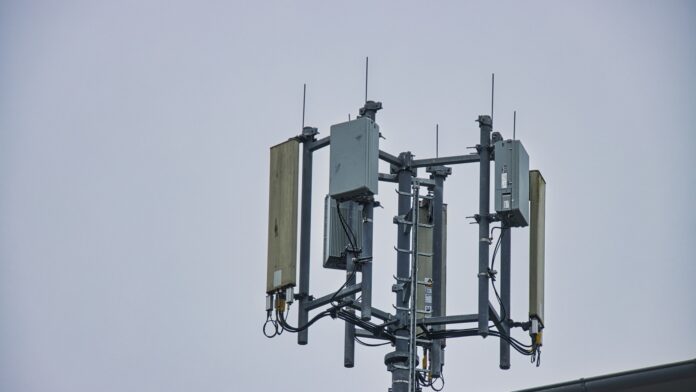
It’s a multi-year agreement. Deployment is set to begin in 2027 across tens of thousands of macro cell sites. The radios will be 64T64R Massive MIMO, meaning 64 transmit and 64 receive paths per unit, the configuration carriers use when they want coverage, capacity and spectral efficiency in the same box.
What Qualcomm is actually shipping
According to Qualcomm’s Business Wire release and the longer write-up on its own newsroom, the QRU100 handles processing inside the Massive MIMO radio units, while the QDU100 does high-performance Layer 1 work for the distributed units. Qualcomm’s pitch is performance per watt: squeeze more capacity out of each site so the economics of a tens-of-thousands-site build don’t fall apart.
Financial terms weren’t disclosed. CNBC, Teslarati, RCR Wireless and Drive Tesla Canada all confirmed the same outline from the Qualcomm statement. Not a Tesla App had not posted a dedicated Qualcomm piece when we checked for this run.
Durga Malladi, an executive vice president at Qualcomm, said in the statement: “Together with SpaceX, we are building world-leading cellular infrastructure in the United States, advancing 5G today, with an opportunity to lay the foundation for AI-native 6G in the years ahead.” Qualcomm also framed the work as a commercial step toward that longer 6G pitch, even though the Starlink Mobile rollout itself is a 5G project.
Satellite plus towers, not satellite instead of towers
Starlink Senior Vice President Michael Nicolls put the goal plainly: “We shouldn’t live in a time where phone calls are still dropping whether you’re at home or on-the-go. Starlink is building the first fully-integrated nationwide satellite and terrestrial network that will keep people connected no matter where they are.”
That hybrid line is the whole point. Starlink’s direct-to-cell satellites are meant to kill outdoor dead zones. The Qualcomm-powered ground network is meant to add capacity where people actually live and work. SpaceX has been stacking the other pieces for months: mid-band and low-band spectrum deals (including EchoStar and 800 MHz holdings), FCC filings that unlocked hundreds of megahertz for satellite-to-phone, and reported talks that could land it tower access or even a consumer brand via Boost Mobile. Qualcomm is the radio vendor that turns spectrum and tower leases into a network people can call on.
Competitors aren’t sitting still. AT&T and AST SpaceMobile just showed a ground-to-satellite handoff of their own, a story we covered with the Japan angle through Rakuten, and that race is now about who can stitch space and ground into one phone session without the user noticing.
The EVX Take
Japan is already living the hybrid future the U.S. is still assembling. NTT Docomo’s Starlink Direct service has crossed 10 million users, KDDI’s au Starlink Direct sits alongside a fresh V2 contract, and SoftBank and Rakuten are both in the satellite-to-phone mix. When SpaceX wires Qualcomm radios into tens of thousands of U.S. macros, it’s building the American version of a model Japanese carriers have already started selling: satellite for the gaps, terrestrial 5G for the crowd. If Starlink Mobile works, the pressure on Japan’s carriers won’t be “should we add satellite?” — they’ve done that — it’ll be “how seamless is the handoff, and how cheap is the plan?” Watch the U.S. build for the answer.
Lester’s take
I’m a Tokyo photographer on my fourth Tesla, and FSD still isn’t approved here, so I’m basically a professional at watching other countries get the cool stuff first. This one I don’t mind. Japan already has Docomo, au, SoftBank and Rakuten wiring satellite into regular phones. The U.S. is now bolting Qualcomm radios onto Starlink so the towers can keep up. Same idea, different order. If my Model Y can’t drive itself to the convenience store yet, the least I can ask is that my phone stop dropping calls when I leave the Yamanote Line. Starlink Mobile, take notes from Tokyo. We’ve been practicing.
Sources: Qualcomm via Business Wire, Qualcomm newsroom, Qualcomm on X, Starlink on X, CNBC, Teslarati, RCR Wireless, Drive Tesla Canada.
— Lester Miyashiro, EVX News
Featured image: Detail of a Telekom 5G cell mast in Kiel, Germany, Dec. 6, 2020. Photo: Fabian Horst via Wikimedia Commons, CC BY-SA 4.0 (cropped).