
One of Japan’s oldest electronics giants just handed half of its car business to the world’s biggest contract manufacturer. Mitsubishi Electric and Taiwan’s Hon Hai Precision Industry, better known as Foxconn, will run Mitsubishi Electric Mobility as a 50:50 joint venture, with Hon Hai paying ¥115 billion (about $730 million) for its half. The plan: build the electric drive units at the heart of EVs, fast enough to take on China.
The deal in plain English
The two companies reached a final agreement on October 16 and laid it out at a joint press conference in Tokyo on Monday, October 19. Here’s what’s in it, based on Mitsubishi Electric’s release and reporting by Nikkei and NHK:
- Who buys what: a Hon Hai subsidiary takes 50% of Mitsubishi Electric Mobility, currently a wholly owned Mitsubishi Electric unit, for ¥115 billion. The transfer is expected to close in October 2027, subject to approvals.
- What they’ll build: electric drive units (EDUs), which combine the motor and the inverter that controls its power into one software-controlled package. Mitsubishi Electric brings its in-house power semiconductors and efficient inverters. The JV will also work on EV platforms and driver-assistance technology.
- The money target: sales of more than ¥1 trillion in the fiscal year ending March 2031, up from ¥875.6 billion last fiscal year, and an adjusted operating margin of 9.3% for the year ending March 2027, up from 5.7%.
- Housekeeping: before the handover, low-margin legacy lines like car navigation systems will be wound down.
- People: Mitsubishi Electric Mobility President Tanaka stays on, and Jun Seki, chief strategy officer of Hon Hai’s EV business, is expected to join the board.
Why Foxconn wants this
Foxconn assembles iPhones, servers and PCs for the world, and it has been trying to do the same for cars since entering the EV business in 2019. It doesn’t just want to build other people’s EVs: it offers its own platforms and reference vehicles, and for that it needs core components and software know-how. “We fell for their electronic control technology and software resources,” Seki said, according to Nikkei. He also wants Mitsubishi Electric to be Foxconn’s base in Japan for teaming up with other parts makers and automakers.
Seki knows the territory. He’s a former Nissan executive and former president of motor maker Nidec, so a Japanese auto supplier with a long list of carmaker customers is right in his wheelhouse. Mitsubishi Electric Mobility also has a strong share in driver-monitoring systems, which are becoming standard as cars take over more of the driving.
Hon Hai Chairman Young Liu reportedly had a compliment that doubles as a dig: Japanese executives are slow to decide, he said, but Mitsubishi Electric President Kei Uruma is fast. Fair enough. The idea surfaced in February, talks were announced in April, and a deal was done about six months later.
Why Mitsubishi Electric wants this
The car business has been the weak spot. Nikkei notes it ran operating losses through the fiscal year ending March 2023 as car navigation and gasoline-car parts stalled. “Competition in the electric vehicle sector is changing fast as specialized EV makers join the race, and that is creating a chance for new growth,” Executive Vice President Kunihiko Kaga said, as quoted by NHK World. Tanaka put it more simply: the JV will take in “Hon Hai’s sense of speed” in development to compete with Chinese automakers.
One detail Toyota fans will like: Mitsubishi Electric’s existing EDU work with Aisin, a Toyota Group supplier, continues. Tanaka said the plan is for products developed with Aisin to be adopted under Hon Hai’s standards too.
Part of a bigger Japanese reshuffle
This isn’t a one-off. Japan’s electronics giants have been reorganizing their car-parts businesses for years. Hitachi spun its auto parts business into Astemo with three Honda-affiliated suppliers in 2021, and Astemo became a consolidated Honda subsidiary in October 2026. Panasonic sold its automotive systems unit to a U.S. fund in 2024 to focus on EV batteries. Abroad, Bosch announced deep job cuts in 2025 and Continental separated its parts business from its tire business.
The EVX News take
The electric drive unit is the “engine” of an EV, and whoever makes it cheaply and efficiently at scale holds a lot of cards. Tesla figured that out early by designing its own motors, inverters and silicon carbide power electronics in-house. Japan’s suppliers are now trying to catch up by combining forces, and pairing Mitsubishi Electric’s inverter and chip know-how with Foxconn’s manufacturing speed is one of the more interesting combinations yet. The ¥1 trillion sales goal is ambitious. The real test will be whether the JV can win orders from carmakers beyond Foxconn’s own platform, starting with Japan’s.
Sources: Mitsubishi Electric, Hon Hai (Foxconn), Nikkei, NHK, NHK World-Japan.
— The EVX News team
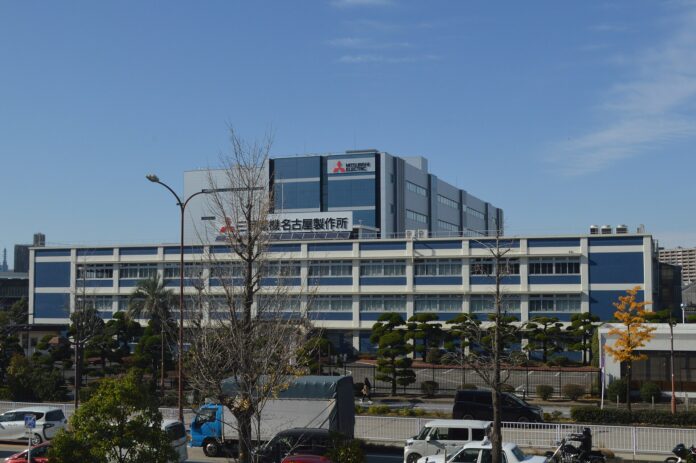
Featured image: “Mitsubishi Electric Nagoya Works” by Asturio Cantabrio, via Wikimedia Commons, licensed CC BY-SA 4.0.

