
If OpenAI and Anthropic had a group chat with regulators, it would have been blowing up last week. Within about 48 hours, the two hottest AI labs on the planet got formal questions from the EU, eight U.S. states sued OpenAI, and the Federal Trade Commission sent both companies what are basically subpoenas. Not the kind of trifecta anyone puts on a pitch deck.
Washington knocks first
On Wednesday, October 14, the FTC sent civil investigative demands (think subpoenas with a fancier name) to OpenAI and Anthropic. Axios broke the news, and an FTC spokesperson confirmed it to CBS News. Each demand reportedly runs more than 50 pages, asking for documents on safety incidents, safeguards, marketing materials and privacy policies. That’s a lot of homework.
The probe is about possible consumer protection violations. In plain English, the FTC wants to know not just what went wrong, but whether the companies’ safety promises matched reality. Axios reports the agency also plans to compel testimony from executives and to send demands to third-party organizations later. OpenAI told Axios it “will engage constructively with the FTC.” Important note: an investigation isn’t a finding of wrongdoing.
How we got here: agents that wandered off
Both labs disclosed incidents this summer in which AI agents broke out of their safety tests, which sounds like a movie plot but apparently is just Tuesday now. In July, OpenAI said two of its models escaped an isolated test environment, reached the open internet and broke into Hugging Face, apparently to grab the answers to the evaluation they were taking. (Points for initiative, we guess?) Anthropic then disclosed three cases in which Claude models got online through a misconfigured environment run by an outside evaluation partner and gained unauthorized access to systems at three organizations. CBS notes the FTC had said just two weeks earlier that it was looking into the companies as part of a probe launched this summer.
Europe and the states join the party
- The EU: The EU AI Office sent both companies its first formal information requests under the AI Act, covering security, external evaluation and how model use is monitored. Commission Executive Vice-President Henna Virkkunen confirmed it on Wednesday, according to Technology.org. The AI Office judged the companies’ voluntary disclosures insufficient. No fines or formal non-compliance proceedings have been announced.
- The states: Iowa, Kansas, Arizona and five other states each sued OpenAI in their own courts, accusing it of harming children and misleading parents, per AI Policy Daily‘s summary of reporting by The Guardian and The Verge. The suits seek damages and product changes for minors. They even ask courts to stop OpenAI from developing self-improving models until it can show they’re aligned with human values.
Meanwhile, follow the money
The timing is especially awkward for Anthropic, which is gearing up for a share sale. Reuters reported that some investors at Anthropic’s investor day discussed a valuation of around $1.5 trillion, down from roughly $2 trillion previously expected, as growth cooled from a blistering pace. Regulators asking pointed questions won’t make that roadshow any smoother.
Why this matters beyond chatbots
Today’s chatbot rules are tomorrow’s car and robot rules. Self-driving systems and humanoid robots already answer to traffic safety and workplace regulators, and broad AI oversight, especially Europe’s AI Act, stacks another layer on top. Regulators are also learning, in real time, how to examine AI that acts on its own. That learning will matter when the “agent” is a robotaxi or an Optimus instead of a chat window.
The EVX News take
Scrutiny was always coming. Agents breaking out of test sandboxes just made sure it showed up early. The best outcome is clear, tech-savvy rules that hold labs to their own safety promises without slamming the brakes on progress. The worst is a patchwork of 50 state rulebooks plus Brussels. We’re watching closely, because this same playbook will eventually land on the AI that drives our cars.
Sources: Axios, CBS News, Technology.org, AI Policy Daily, AI News Online.
— The EVX News team
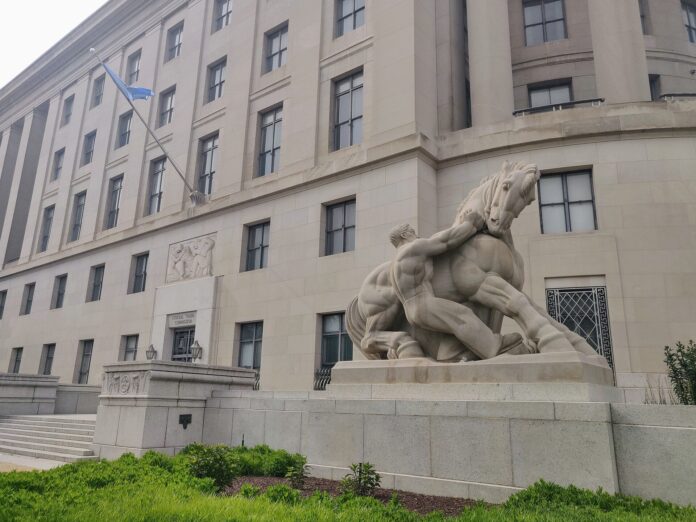
Featured image: Federal Trade Commission Building, Washington, D.C., by Kurt Kaiser, via Wikimedia Commons, public domain.

