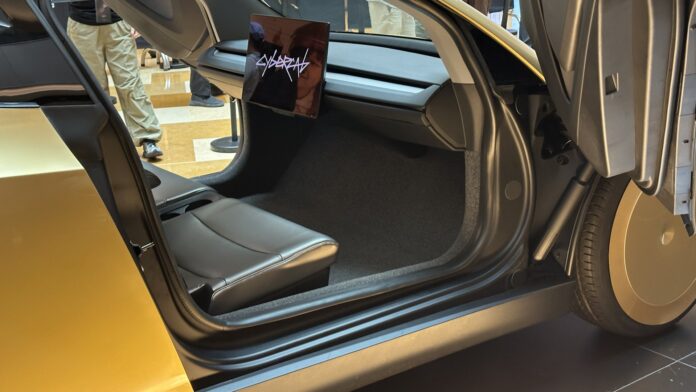

The Cybercab has left Austin. Tesla opened public rides in its two-seat, wheel-free robotaxi in Dallas on Thursday, the first city outside Austin to get the purpose-built car. The official Robotaxi account made it public at 11:47 a.m. ET / 8:47 a.m. PT Thursday, Nov. 19 (1:47 a.m. JST Friday, Nov. 20) with a short video and two lines: “Howdy Dallas. Cybercab has arrived in your city.”
An hour or so earlier, Tesla had started sending Dallas riders an app notification and email titled “Arriving Now in Dallas.” It reads: “Be one of the first to take a Cybercab ride in Dallas. Fully autonomous means there’s no need for a steering wheel, pedals or mirrors.” Sawyer Merritt shared the notice on X. Not everyone saw the car in the Robotaxi app right away, as Drive Tesla Canada noted, so expect a gradual rollout rather than a flood on day one.
None of this came out of nowhere. Tesla said on its Q3 earnings call on Oct. 21 that Cybercab rides would reach Dallas in November, the Robotaxi account teased the launch on Wednesday, and earlier this week Tesla registered a record 200 Cybercabs in Texas in a single day. That brought the state’s Cybercab count to 773, per Drive Tesla Canada. Dallas itself isn’t new territory. Tesla has run Model Y robotaxis there since April, according to Teslarati, so Thursday swaps the purpose-built car into an existing service area.
Version 1.5, now with a dish
The Dallas cars aren’t quite the ones Austin riders know. They’re a newer build that Tesla fans are calling Cybercab V1.5, and the obvious change is on the back: a Starlink terminal built flush into the rear hatch at the factory. Drone footage from Giga Texas on Wednesday showed rows of gold production Cybercabs wearing the new, cleaner Starlink cover as they were loaded onto transport trucks, Teslarati reported. Earlier versions carried a more obvious rectangular panel. A Dallas owner poking around one of the new cars also found a camera in the rear trunk lid, which looks like a way for a car with no driver to check that you didn’t leave your groceries behind. Tesla hasn’t explained either change.
Satellite internet on a robotaxi is less of a gimmick than it sounds. A car that drives itself needs a steady data link for remote support and fleet updates, and cell coverage drops out in more places than people think. A dish on the hatch is a backup that doesn’t care which carrier owns the nearest tower. It also happens to be a very visible ad for another Musk company.
Dallas makes it two Cybercab cities out of the eight where Tesla’s Robotaxi service now runs around the clock. Private buyers are next in line. Tesla started selling the Cybercab to select customers for $29,990 last week, with a required $299-a-month Autonomy Subscription and deliveries due in December.
The EVX Take
The second city is the one that matters, because it shows Tesla can move the car and the software to a new map without a long pause, and the Starlink hatch suggests the production line is already building for wider deployment. Japan is working from the rulebook end. The transport ministry has been preparing, according to the Nikkei, to certify vehicles with no steering wheel or pedals under one standard instead of case by case, and Waymo plans to start testing Toyota-built bZ4X robotaxis here in 2027. Tesla hasn’t said anything about bringing the Cybercab to Japan, and FSD (Supervised) still isn’t approved here. But Starlink is already sold in Japan, and if the rules land, the hardware questions look more settled than the regulatory ones.
Sources: Robotaxi (@robotaxi) on X, Tesla’s “Arriving Now in Dallas” app notification via Sawyer Merritt on X, Drive Tesla Canada, Teslarati, Texas DMV automated-vehicle registry. Featured image: the open cabin of a Tesla Cybercab, with no steering wheel or pedals. Photo: JustAnotherCarDesigner / Wikimedia Commons (CC0), cropped.

