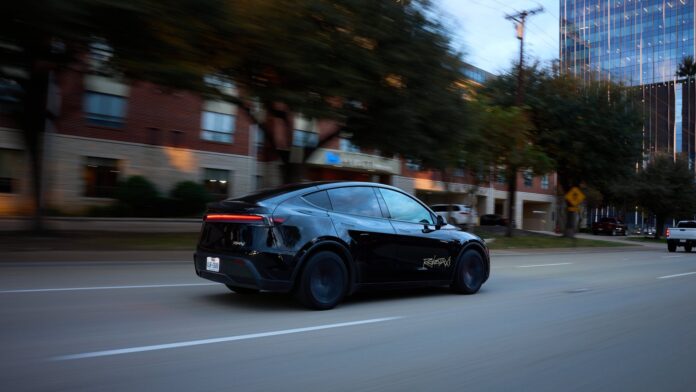

Tesla owners may get to send their own cars out to earn money on the Robotaxi network sooner than Tesla itself said a month ago. Elon Musk wrote on X on Monday, Nov. 16 that trials letting customer-owned cars join the service “may start” next month, which would mean December 2026, “if things” go well.
Musk posted the reply at 4:57 PM ET / 1:57 PM PT on Monday (6:57 AM JST on Tuesday, Nov. 17). He was answering an Austin rideshare driver who said he drives for Uber using FSD exclusively, keeps between 49% and 63% of each passenger fare, and would rather send his Model Y off to work for Robotaxi without him.
“Coming soon. If things well, may start trials next month,” Musk wrote, the missing word and all. “Much better to manage a fleet of cars than have to drive just one car by yourself!”
Months ahead of Tesla’s own guidance
The interesting part is the date. On Tesla’s third-quarter earnings call on Oct. 21, Ashok Elluswamy, who runs Tesla’s AI software, put the first customer vehicles joining the network at around the second quarter of 2027, as Not a Tesla App noted in its report on Musk’s reply. A December trial would pull that forward by roughly four to six months, at least for a first small group.
That’s a big “if,” and Musk said so himself. His reply didn’t name a city, list eligible cars, explain who gets invited, or say how fares would be split between owners and Tesla. Musk’s self-driving dates have slipped before, so a short, invite-only pilot is the realistic reading here. A broad rollout is not.
Austin is the obvious bet for the first trial. It’s where Tesla started Robotaxi rides in June 2025, it’s where new features usually show up first, and it’s where the driver Musk answered is based. Tesla’s Robotaxi service now runs in eight US cities, around the clock in all of them, and on Monday it nearly doubled its Miami service area.
Which cars, and what it costs
Hardware is the first open question. Tesla’s own Robotaxi Model Ys and the Cybercab carry gear that customer cars don’t, including extra communication units and camera washers, according to Not a Tesla App. Teslarati added that hardware differences, regulatory approvals, insurance arrangements and software readiness will all decide whether that “if things go well” condition is met. Musk’s reply came in a Model Y thread, but he didn’t limit it to the Model Y.
Then there’s the subscription. Owners in the US pay $99 a month for FSD (Supervised) today. Tesla hasn’t said whether a car earning fares would need that plan, the $299-a-month Autonomy Subscription it requires on the Cybercab, or something new. Musk has already called the $299 figure too high.
The Cybercab adds an odd wrinkle. Tesla started selling it to select customers for $29,990 last week, with first deliveries expected in December in Austin. Under the purchase terms, those cars are for personal use inside existing Robotaxi zones, and earning money with one needs separate permission from Tesla. Drive Tesla Canada did the math: 12 months of the subscription comes to $3,588 before insurance, charging and registration. If a Model Y owner can put the car to work in December while a brand-new Cybercab owner can’t, expect some pointed questions from Cybercab buyers. Musk’s reply didn’t mention the Cybercab or rule it out.
Tesla is also wiring its Robotaxi app into the rest of Musk’s companies. On Monday the official @robotaxi account announced that riders can now link X Money to the Robotaxi app to pay for trips. X Money says riders can get up to 3% cashback. X Money is only available in the US for now.
A 2016 promise, finally on a calendar
The idea is almost a decade old. In Tesla’s Master Plan, Part Deux from July 2016, Musk wrote that owners would be able to add their car to Tesla’s shared fleet just by tapping a button on the phone app, and have it earn income while they’re at work or on vacation. On Tesla’s July 2025 earnings call he said he was confident personal vehicles could join the network in 2026. December is the last month left to make that one come true.
For the driver Musk answered, the pitch is simple. Today he gets roughly half to two-thirds of every fare and supplies all the driving hours himself. A car earning while he’s asleep changes the job from driving to running a tiny fleet.
The EVX Take
This matters even though it starts in Texas. Owner-run robotaxis are the piece that turns Tesla’s network from a fleet Tesla has to build and pay for into one its customers fund, and that’s how it could grow faster than any company buying its own cars, Waymo included. For readers in Japan, the gap is mostly legal, not technical. FSD (Supervised) still isn’t approved here, and private cars carrying paying passengers are only allowed under the limited “Japan-style ride-share” scheme that started in April 2024, where drivers work under taxi companies in set areas and hours. Even a polished US version would need Japan to approve driverless operation of privately owned cars and a new set of insurance rules before a Model Y in Tokyo could earn a single yen. So the December trial is worth watching less as a preview of Japan and more as the first real test of the economics that Japan’s taxi and ride-share debate will eventually have to answer.
Sources: Elon Musk’s post on X; Tesla Master Plan, Part Deux; @robotaxi on X; Not a Tesla App; Teslarati; Drive Tesla Canada. Featured image: a Tesla Robotaxi Model Y on the street in Fort Worth, Texas. Image: Tesla (@robotaxi), cropped.

