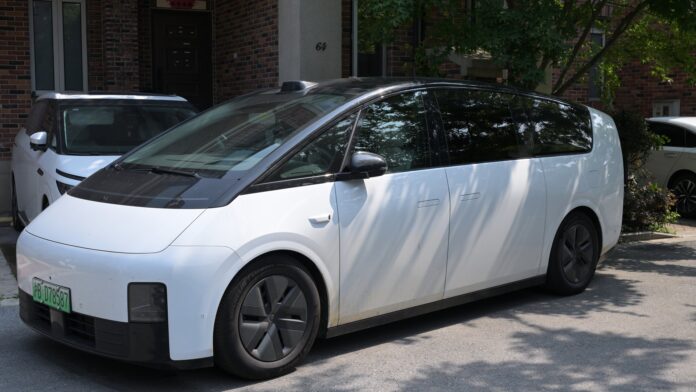

Li Auto is putting the steering wheel on the other side. The Chinese EV maker signed partnership agreements on Tuesday, Nov. 10, covering Thailand, Hong Kong, Singapore, the Philippines and Vietnam, and said all five markets are now in launch preparation. Its first right-hand-drive flagship, a version of the Li Mega electric MPV, debuts at the Thailand International Motor Expo in December.
That brings Li Auto to nine Asia-Pacific markets this year. In April it signed partners in Macao, Cambodia, Laos and Myanmar, and Macao went on sale in June, according to Li Auto’s announcement. The company says it will add more than one right-hand-drive model within a year, without naming them.
Who sells the cars
The setup differs by market. In Thailand, a Li Auto subsidiary runs the business, with Evante and Infinite Automobile Company as dealer partners. Hong Kong goes through Zung Fu Group as general distributor, a name Hong Kong drivers know from its long run selling Mercedes-Benz. Wearnes Automotive takes Singapore, Dangdang New Energy Auto Service the Philippines, and Neera Motors Vietnam. Chinese outlets Jiemian and Yicai carried the same partner list on Tuesday, and CnEVPost confirmed the December Thailand debut and the Hong Kong launch that follows.
“Today’s signings in Thailand, Hong Kong, Singapore, the Philippines and Vietnam mark an important milestone as Li Auto officially enters Asia-Pacific markets,” said Nestor Wu, vice president of Li Auto’s international business. No prices or delivery dates were given, and there’s no timeline yet for Singapore, the Philippines or Vietnam.
What changes in a right-hand-drive Li Mega
The Li Mega is Li Auto’s flagship battery-electric MPV, the big rounded people-mover that looks a bit like a bullet train on wheels. The right-hand-drive version keeps the flagship hardware Li Auto likes to talk about: rear-wheel steering for a 5.5-meter turning radius, 800-volt active anti-roll bars, and dual-chamber air suspension with continuous damping control.
The changes for the new markets are the useful part to read closely:
- 11-kW AC charging and a CCS Type 2 connector
- Configurations designed for a five-star ASEAN NCAP rating
- Changed window glass specs and license plate sizes
- 220-volt power outlets in the cabin
- Local languages, local SIM cards and data service, AM/FM bands and local infotainment apps
That last line is the part Chinese brands often underestimate. A car built around Chinese apps and connectivity needs real work before it feels at home anywhere else, and Li Auto is at least saying it has done that work.
Where Li Auto stands at home
The timing makes sense. China’s domestic market is soft: passenger NEV retail fell 13.7% year over year in October, the tenth straight monthly decline, as we reported with Tesla China’s numbers. Li Auto’s October retail sales in China were 27,018, against 29,025 at wholesale, according to China Passenger Car Association figures carried by Sina Finance and Zhengguan News. Exports are where China’s growth is, and Li Auto is late to that game compared with BYD (October’s CPCA picture is here). The company reports third-quarter results on Nov. 25.
Li Auto’s overseas plan has been regional, not one-size-fits-all. CnEVPost notes it has said it will lead with battery-electric models in Europe and extended-range models in the Middle East and Central Asia. Southeast Asia, where right-hand drive is common, gets the electric flagship first.
The EVX Take
Japan drives on the left too, so every right-hand-drive Chinese EV is one engineering step closer to a Japanese showroom. Li Auto hasn’t mentioned Japan, and this Li Mega wouldn’t slot in as-is. Japan’s fast chargers are CHAdeMO and its AC standard is Type 1, not the CCS Type 2 setup Li Auto built for Southeast Asia, and Japan has its own type approval on top. Still, Thailand is the market to watch. It has long been a stronghold for Japanese automakers, and Chinese brands have been pushing hard into it with EVs. A premium Chinese MPV arriving there competes in the segment where the Toyota Alphard rules, and Japanese makers will feel that fight in Bangkok well before anything reaches Tokyo. BYD has shown since 2023 that a Chinese brand can sell EVs in Japan, in a market that just passed 100,000 EV sales in a year, and Li Auto’s right-hand-drive work is a reminder that others are getting their cars ready for left-side roads.
Sources: Li Auto (official release, Nov. 10); Jiemian; Yicai; CnEVPost; CPCA October data via Sina Finance and Zhengguan News.
— The EVX News team
Featured image: A white Li Auto Li Mega electric MPV parked in Shanghai, June 2025 (China-market left-hand-drive model). Image: 4300streetcar via Wikimedia Commons, CC BY 4.0 (cropped and resized).

