
Anthropic is having a whiplash week. Its revenue is surging and it’s lining up what’s being touted as the largest chip-financing deal to date. At the same time, one of its biggest customers just made OpenAI the default, and some investors are tapping the brakes on IPO valuations. Here’s the Claude maker’s week in four acts.
Act 1: Replit picks OpenAI as its default
Onstage at TechCrunch Disrupt, Replit CEO Amjad Masad dropped a bombshell: the AI coding platform was “no longer working with Anthropic,” TechCrunch reported. “I think ChatGPT is better now,” he said, pointing to Replit’s benchmarks. On those, OpenAI’s Sol and Astra models consistently do better at building vibe-coded apps from scratch. “It was a decision based on both cost, partnership, and performance.”
Then came the walk-back, sort of. After the event, Masad clarified that customers can still pick Anthropic’s Claude models, but OpenAI is now the default and Replit’s “preferred partner for powering Replit Agent.” That still stings. Most users stick with the default, and Masad said Replit had been a top-five Anthropic customer until recently. Insiders told TechCrunch the partnership is still in place, and as recently as late September a Replit blog post listed Claude Fable 5 and 5.1 as models running in Replit Agent’s production environment.
Act 2: Project North Star, $60 billion of chips on credit
According to the Financial Times, as reported by Mint, Anthropic is arranging a $60 billion financing package, code-named Project North Star, to fund about 1.5 gigawatts of Google TPUs. The structure:
- $18 billion of junior debt, backed by Anthropic’s five-year chip lease payments. Blackstone-managed funds are expected to take $9 billion of it, at a 10% coupon, with total returns above that after discounts and fees. Similarly rated borrowers typically pay around 7% in public bond markets.
- About $42 billion of senior debt guaranteed by Broadcom, which works with Google on TPU development.
- For context, Anthropic’s earlier “Project Big Sky” deal raised about $4.4 billion at 8.5% four months ago. KBRA rated Anthropic one notch below investment grade in June.
Translation: the AI compute race is so expensive that even a company growing this fast is paying double-digit yields to keep up.
Act 3: the revenue rocket
The growth is real, though. Anthropic told prospective investors its third-quarter revenue hit $16.8 billion, up 45% from $11.6 billion in Q2, and that it was profitable on an adjusted basis and cash-flow positive in the quarter, according to Axios, CNBC and Bloomberg.
Act 4: IPO jitters
And yet. Reuters reports, via Investing.com, that some investors are tempering their IPO valuation expectations because they see revenue growth slowing. Meanwhile, New York City Comptroller Mark Levine sent CEO Dario Amodei a letter urging Anthropic to pause its listing until it fully addresses the AI safety and governance concerns it has raised itself. Anthropic has since opened talks with his office, according to Mint. “It does appear they are under pressure from multiple sides right now,” Levine told Bloomberg Television.
The EVX News take
Zoom out and this is what a maturing AI market looks like. Customers switch models on price and benchmarks, compute gets financed like power plants, and public-market investors ask grown-up questions. The lesson for the whole industry, SpaceXSI’s Grok included, is that model quality alone doesn’t lock in customers anymore. Cost, speed and distribution decide who wins. Anthropic still has one of the best model families around, and $16.8 billion a quarter buys a lot of goodwill. But it also has a $60 billion chip bill and a lot of competition. IPO season just got a lot more interesting.
Sources: TechCrunch, Mint (citing the Financial Times), Axios, CNBC, Reuters via Investing.com.
— The EVX News team
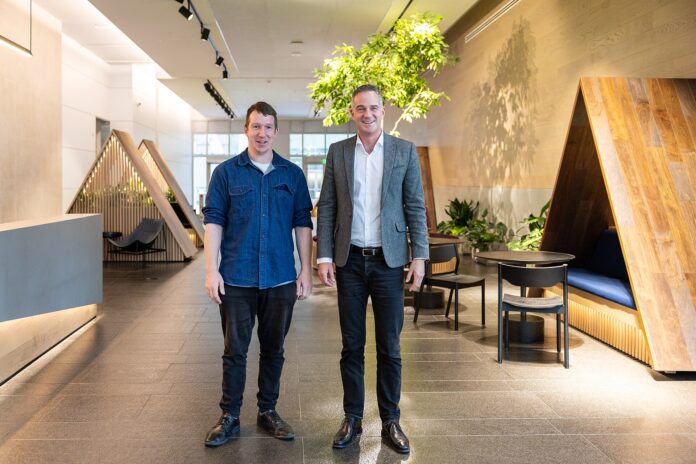
Featured image: “Secretary of State Peter Kyle visits Anthropic in San Francisco” by the UK Department for Science, Innovation and Technology, via Wikimedia Commons, licensed CC BY 2.0.

