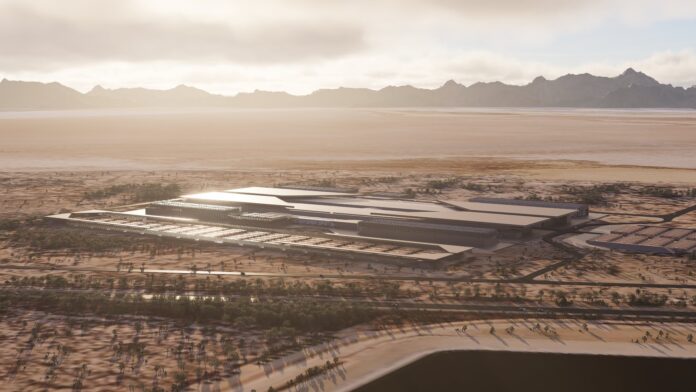

SpaceX says it plans to spend more than $74 billion on two new supercomputing sites: up to $24 billion for a facility next to Starbase in South Texas and roughly $50 billion for a nine-building campus in Cochise County, Arizona. The company laid out both projects in an update on its website and a string of posts on X starting at 11:08 a.m. ET / 8:08 a.m. PT on Thursday, Nov. 12 (1:08 a.m. JST Friday, Nov. 13). Elon Musk reposted it a couple of minutes later with three words: “SpaceX community benefits.”
The Texas number wasn’t a total surprise. A Starbase public notice earlier this week had already described a $24 billion “gas-fired power plant and super-compute facility,” and the project needed a land swap with Brownsville over the summer. The Arizona price tag is the new part. SpaceX’s name only surfaced on that project on Nov. 4, when company representatives showed up at a town hall for an application filed under Tombstone Resources LLC, Teslarati reported.
Starbase: its own power plant, and $220 million for water
The Texas site sits on SpaceX-owned land near the Port of Brownsville and the city landfill. SpaceX says it will generate its own electricity instead of drawing from the public grid, which also spares it the years-long wait to plug into Texas’s main grid. The company says the build has already created more than 3,000 construction jobs and should support more than 500 permanent ones, on top of the more than $15 billion it says it has already spent on Starship and Starbase.
The other piece is water. SpaceX has committed $220 million to Brownsville and Cameron County water and wastewater projects, $40 million of it already paid to the Brownsville Public Utilities Board. The money funds work that should add about 20 million gallons a day from sources independent of the Rio Grande, according to SpaceX. The company stresses it isn’t buying water rights and will pay standard rates. The Texas Tribune notes the 444-acre tract was de-annexed from Brownsville in August at SpaceX’s request and later brought into Starbase’s city limits.
Cochise County: 6 gigawatts and a very large battery
Arizona is the bigger swing. According to the county application, as reported by DCD, the 747-acre site near the Willcox Playa would hold up to nine buildings of about 493,000 square feet each, coming online in four phases of roughly 1.5 GW for 6 GW at full build. SpaceX would pay for about $3.6 billion in grid upgrades and install a 24 GWh battery system to smooth out the load. Construction could start in March 2027 if zoning is approved. SpaceX’s own figures are about 5,500 construction jobs, 1,000 permanent jobs, dry cooling with no planned industrial groundwater use, and electricity bills up to 20% lower for members of the local cooperatives.
Those 24 GWh are why Tesla fans lit up. Sawyer Merritt estimated on X that the campus would mean more than $5 billion in Megapack orders for Tesla. SpaceX hasn’t named a battery supplier, so treat that as an informed guess. It’s not a wild one. SpaceX already buys Megapacks for its Memphis-area AI sites, including $269 million worth between January and April this year, according to a filing reported by Drive Tesla Canada.
Neither project is approved yet. The Cochise County Planning and Zoning Commission holds a public hearing on Dec. 9 in Bisbee, with written comments due Nov. 27, and there’s an organized local petition against the permit. The Starbase City Commission takes up SpaceX’s property-tax abatement the same night, at 7 p.m. CT / 8 p.m. ET / 5 p.m. PT on Wednesday, Dec. 9 (10 a.m. JST Thursday, Dec. 10).
The EVX Take
Put the battery in Tesla terms. Tesla deployed 13.7 GWh of storage in the third quarter, its second-best quarter ever, so this one campus would soak up roughly five months of the company’s entire current output if it all went to Megapack. The scale gap with Japan is just as stark. Tokyo’s “watt-bit” policy, which tries to steer data centers toward places with spare power, aims to build several gigawatt-class data center clusters by the early 2030s; SpaceX wants 6 GW on a single site in the Arizona desert, about three and a half times the 1.7 GW of compute it had at the end of September. For Japanese suppliers, especially the chip-equipment makers already racing to fill Terafab orders, that’s a long and expensive shopping list headed their way.
For the earlier pieces of this buildout, see our look at SpaceX’s Gun Range and Spam clusters. The next hard date is Dec. 9, when both local boards hold their hearings.
Sources: SpaceX, SpaceX on X, Teslarati, DCD, Texas Tribune, Drive Tesla Canada, Ministry of Internal Affairs and Communications (Japan). Featured image: SpaceX rendering of the planned Cochise County campus.

