
BYD has entered exclusive talks to buy Ineos Automotive’s car plant in Hambach, in France’s Moselle region, the company said on Tuesday, Nov. 24. If it closes, it would be BYD’s second car factory in Europe after Szeged, Hungary, and Reuters calls it the first planned purchase of a European car plant by a Chinese automaker. Its rivals have mostly rented space instead: Dongfeng at a Stellantis plant in France, Leapmotor at Stellantis in Spain, Geely at a Ford plant in Spain.
Nothing is signed. BYD says the deal still has to go through consultation with the plant’s works councils (employee representative bodies that French law requires companies to consult before a sale). No price has been announced.
“Our commitment to Europe is long term,” said Stella Li, BYD’s executive vice president, in the statement. “We want to give European consumers the choice of vehicles built in France.” BYD says it intends to keep the plant running and protect local jobs.
A famous little factory
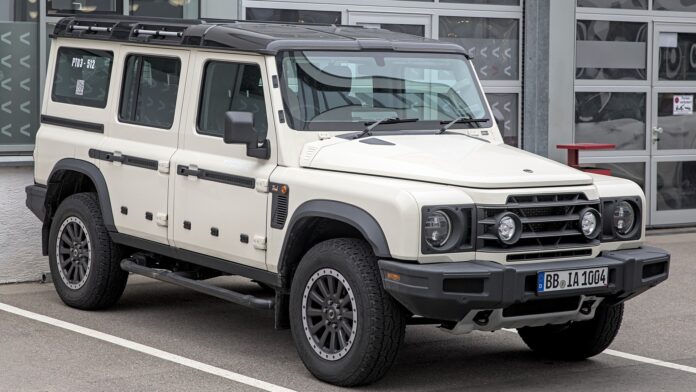
Hambach has an unusual history. From 1998 to 2024 it built the tiny Smart city car, the project Mercedes-Benz started with watchmaker Swatch, according to CnEVPost. Ineos, the chemicals group owned by British billionaire Jim Ratcliffe, bought it in 2020 and has built its boxy Grenadier off-roader and Quartermaster pickup there since 2022. It’s Ineos Automotive’s only plant, Bloomberg noted, and it employs nearly 900 people, according to Reuters.
It’s also badly underused. Shanghai financial daily Yicai reports the site was planned for up to 30,000 vehicles a year but built about 7,500 in 2024, with 2025 expected to come in under 7,000. Ineos sells most of its trucks in the U.S. (about 65% to 70% of sales, depending on the report), so it plans to start U.S. production in 2028, per Just Auto. If the sale goes through, Ineos says the Grenadier and Quartermaster stay in Hambach “for the medium term.” So for a while, a BYD-owned factory could be building British-designed off-roaders. Car industry, everybody.
Why BYD wants to own instead of rent
Two reasons stand out. The first is rules. Reuters reports BYD and its Chinese rivals are hunting for European plants ahead of planned EU “Made in Europe” rules, which would require local content in EVs for them to qualify for subsidies and government contracts. Building in France, inside the EU, also keeps those cars clear of the tariffs on China-built EVs.
The second is volume. BYD registered 38,755 vehicles across the EU, EFTA and UK in October, up 118.9%, and 322,818 through the first ten months, up 132.7%, according to ACEA figures reported by Drive Tesla Canada. That’s more than three times Tesla’s October total in Europe of 12,116. BYD’s European adviser Alfredo Altavilla has said the company eventually needs three assembly plants and a battery factory in Europe, Yicai and CnEVPost reported. Hungary is one. Hambach would be two.
There’s a calendar to watch, too. French President Emmanuel Macron said on X that BYD is working with France on an industrial project in Moselle and that details will come at the Choose France investment summit on Jan. 18, 2027, CnEVPost reported.
The Japan angle
This story lands in Japan’s backyard in Europe. Yicai cites Dataforce data showing Chinese brands took 12.7% of Europe’s car market in the third quarter, passing Japanese brands at 11.9% for the first time over a full quarter. We reported last week that Chinese carmakers now outsell Japan’s in 39 countries. And one of the first factory moves by a Chinese automaker in Western Europe was on a Japanese site: in 2024 Chery formed a joint venture with Spain’s EV Motors to take over Nissan’s former plant in Barcelona, Yicai notes.
The EVX Take
Owning a plant is a bigger commitment than renting a line, and it tells you BYD expects to sell a lot more cars in Europe for a long time. For Japanese automakers this is the uncomfortable part. Toyota has built cars at Valenciennes in northern France since 2001, and “made in France” has been one of its quiet advantages there. A BYD-owned plant a few hours’ drive away takes that edge away, and it does it with a factory that already has workers, suppliers and paint shops in place. The other signal is speed. Buying an existing plant skips years of construction. If the works councils sign off and the Jan. 18 announcement fills in the details, French-built BYDs could arrive much sooner than a new factory would allow, which is exactly the point. Tesla, for comparison, went the build-it-yourself route with Giga Berlin and is now putting about €3 billion (about $3.3 billion) into a Cybercab hall there.
Sources: BYD Europe statement, Reuters via Investing.com, Yicai, CnEVPost, South China Morning Post, CarNewsChina, Bloomberg, Just Auto, Drive Tesla Canada (ACEA data).
Photo: An Ineos Grenadier, the off-roader built at the Hambach plant. Photo by Alexander Migl, CC BY-SA 4.0, via Wikimedia Commons (cropped).Follow @teslaloha on X for more

