
Federal regulators are taking a first look at claims that Tesla’s Robotaxis don’t slow down enough in active school zones. It’s an early-stage review with no crashes or injuries involved, but it’s worth understanding what NHTSA is actually asking and what comes next.
What NHTSA opened
On October 9, the National Highway Traffic Safety Administration opened a defect petition inquiry covering about 1,000 vehicles, including retrofitted Model Y robotaxis and the purpose-built Cybercab. Drive Tesla Canada first reported it, and Not a Tesla App followed up.
- The inquiry stems from a petition filed September 23, alleging that Tesla’s automated driving system doesn’t obey reduced school-zone speed limits. The petitioner submitted three videos.
- NHTSA has identified four incidents: one formal complaint to the agency and three reports shared on social media.
- None involved a collision, injury or fatality.
What a “defect petition inquiry” is, and isn’t
This is the earliest stage of NHTSA’s process. The agency hasn’t found a safety defect. It’s reviewing the petition and evidence to decide whether a formal investigation is warranted. Many petitions end without one. For now, Robotaxi operations continue normally.
Tesla isn’t the only company facing these questions. As both outlets note, Waymo has also drawn federal scrutiny over incidents involving school buses and reduced-speed zones. School zones are one of the hardest cases in autonomous driving: the limits depend on the time of day, flashing beacons and posted schedules, and the map data is often inconsistent. Every AV company has to get them right.
The other inquiry on Tesla’s plate
This is the second NHTSA review of Tesla’s driverless fleet in just over a month. In early September, as public Cybercab rides began in Austin, the agency started examining how Tesla self-certified a vehicle with no steering wheel, pedals or side mirrors. Not a Tesla App reports that Tesla received a 30-day extension and now has until October 30 to answer 21 questions, covering everything from turn signals and brakes to whether passengers can move the vehicle from the touchscreen.
Context: the fleet keeps growing
Tesla now runs more than 300 Cybercabs in Austin alongside its Model Y robotaxis, and Dallas is next in line for Cybercab rides. More vehicles and more miles mean more attention from regulators. That’s normal for any company scaling a new kind of vehicle, and it’s how public trust gets built.
There’s also a fix built into how Tesla operates. Its fleet gets regular software updates, so if a school-zone issue turns out to be real, a correction can reach every vehicle over the air, quickly and without anyone visiting a service center. A human driver who speeds through a school zone gets a ticket. A software fleet that does it gets patched for every car at once.
What to watch
- NHTSA’s decision on whether to escalate to a formal investigation.
- Tesla’s October 30 response on the Cybercab self-certification questions.
- Any software release notes mentioning school-zone or speed-limit handling.
The EVX News take
Four reports, zero crashes and a preliminary inquiry deserve attention, not panic. Tesla should take school-zone behavior seriously, and its over-the-air update model makes it unusually quick to fix one. So fix it fast. A school zone is the last place a robotaxi should push its luck.
Sources: Drive Tesla Canada, Not a Tesla App, Tesla News Wire, NHTSA Office of Defects Investigation.
— The EVX News team
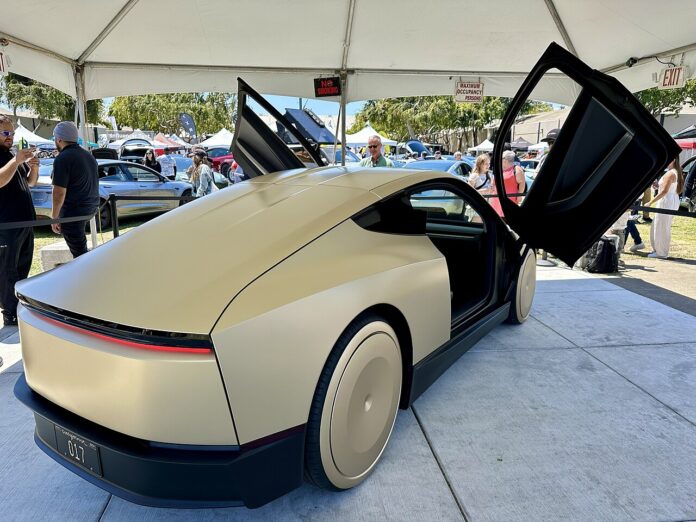
Featured image: Tesla Cybercab, by Steve Jurvetson, via Wikimedia Commons, licensed under CC BY 4.0.

